Shadow Empire: The Revolutionary Guard’s Grip on Iran’s Economy and Currency Collapse
The IRGC and the Rial: A Structural Economic Crisis As of early 2026, Iran is navigating the most severe economic downturn in its modern history. While international sanctions unde
13 January 2026
Category
Commodities
The IRGC and the Rial: A Structural Economic Crisis
As of early 2026, Iran is navigating the most severe economic downturn in its modern history. While international sanctions under the "maximum pressure" campaign have undoubtedly squeezed the nation's oil revenue, a deeper internal force is driving the currency’s freefall: the Islamic Revolutionary Guard Corps (IRGC). Once a purely military wing, the IRGC has metastasized into a massive monopolistic conglomerate that controls between 30% and 50% of Iran’s formal and informal economy. This iron grip has transformed the Iranian Rial from a national currency into a casualty of a "plunder machine" designed to fund regional operations and internal security at the expense of 90 million citizens.
The Monopoly on Trade and Infrastructure
The IRGC’s economic influence is facilitated through thousands of front companies and massive engineering firms like Khatam al Anbiya. These entities dominate critical sectors including oil and gas, telecommunications, port operations, and construction. By controlling the nation's primary ports, the IRGC manages a sophisticated smuggling network estimated to move between $12 billion and $25 billion in untaxed imports annually.
This parallel economy creates a devastating cycle for the Rial. Because the IRGC operates outside the formal regulatory framework, its massive transactions bypass the central banking system, starving the legitimate market of hard currency. When the Revolutionary Guard secures a monopoly on a sector, it effectively wages economic warfare against the private productive sector, driving domestic entrepreneurs out of business and accelerating capital flight.
The Exchange Rate Pipeline of Corruption
The most direct reason for the Rial’s suffering in 2026 is the regime's multi tiered exchange rate system. The Iranian government maintains a "preferential rate"—set significantly lower than the market value intended for importing "essential goods" like medicine and food. However, as President Masoud Pezeshkian recently admitted, this system has become a corruption pipeline for regime insiders.
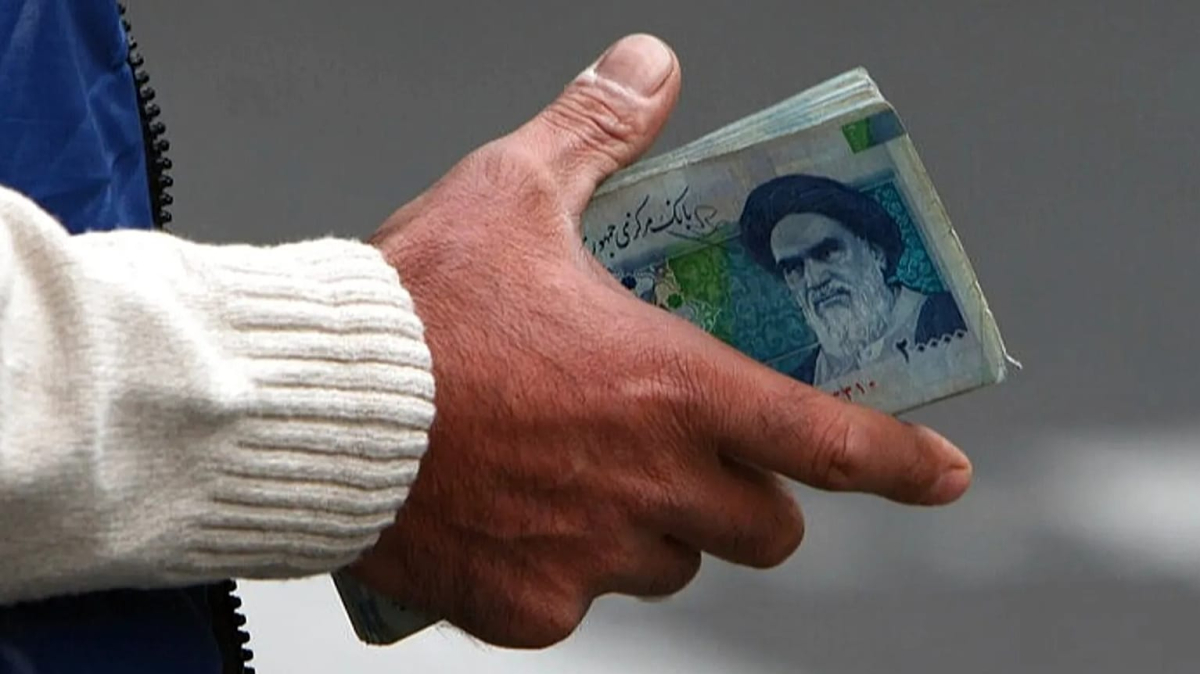
IRGC linked firms receive subsidized dollars at the official rate, but instead of lowering prices for the public, they often sell the imported goods at free market prices. In some cases, the subsidized currency is simply sold directly on the black market for a massive profit. This disparity creates an artificial scarcity of foreign currency for ordinary citizens and small businesses, pushing the Rial’s value on the open market to record lows recently hitting a staggering 1.4 million Rials per US Dollar.
Inflationary Spending and Security Priorities
The IRGC’s financial needs are insatiable, particularly as regional tensions escalated following the 12 day conflict with Israel in mid 2025. To fund its vast military apparatus and support regional proxies, the IRGC relies on a "money printing apparatus" serviced by the Central Bank.
The 2026 budget proposal reflects this dangerous imbalance: security spending was increased by nearly 150%, while public sector wage increases lagged far behind an inflation rate that has soared past 50%. By prioritizing the funding of the IRGC over domestic infrastructure and social welfare, the state has effectively abandoned its responsibility to stabilize the currency. The result is a "mercernary economy" where the elite thrive on volatility while the middle class is hollowed out, leaving 20 million households in poverty.
The Collapse of Public Trust
Ultimately, a currency's value is a reflection of trust in the state. The IRGC’s control of the economy has demolished the social contract in Iran. As the Guard Corps signaled its readiness to use lethal force against the "currency protests" in early January 2026, the message to investors and citizens was clear: the regime will prioritize its survival over economic reform.
This lack of accountability and the absence of the rule of law ensure that the Rial remains a "risky asset." Iranians are increasingly converting their savings into gold or dollars to escape the "metabolism of confiscation" that defines the IRGC’s economic model. Without a fundamental restructuring of the IRGC’s role in the market, the Iranian Rial is destined to remain in a state of structural decline.