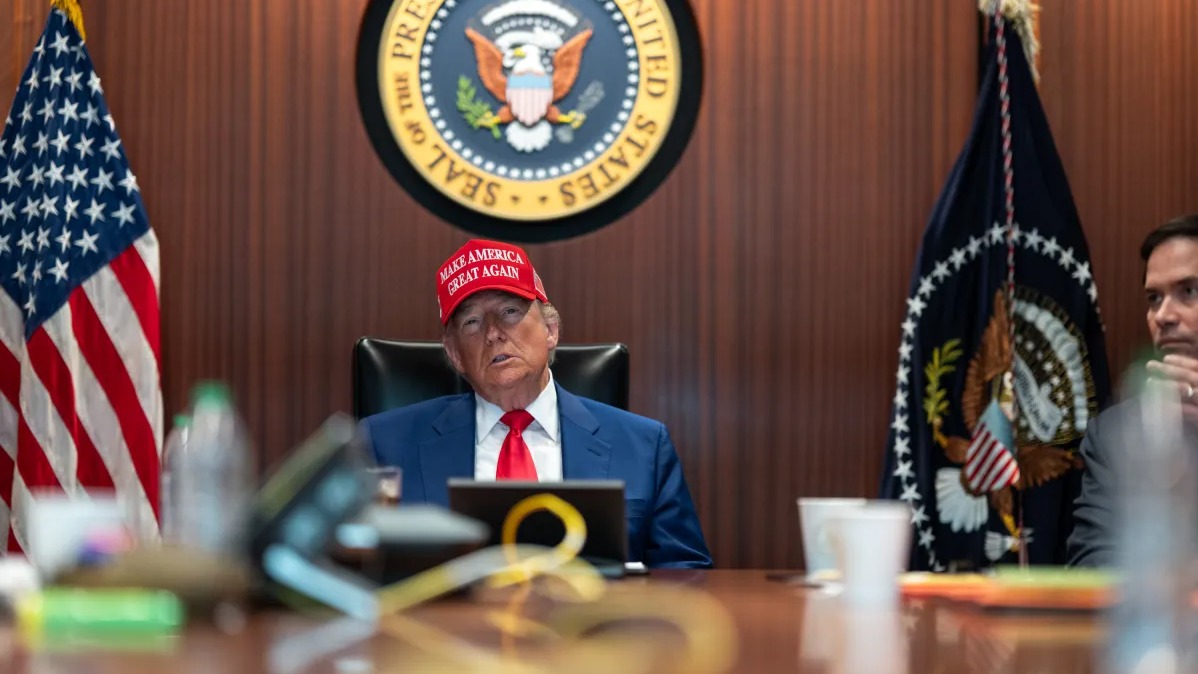
“Phased Ceasefire Brokered by Trump and Qatar Signals Truce in Israel‑Iran Conflict”
Trump Declares Ceasefire Between Israel and Iran After 12‑Day Conflict In a surprising turn of events, former U.S. President Donald Trump announced on June 23, 2025, that Israel an
Commodities
Trump Declares Ceasefire Between Israel and Iran After 12‑Day Conflict
In a surprising turn of events, former U.S. President Donald Trump announced on June 23, 2025, that Israel and Iran have agreed to a ceasefire, potentially ending a tense 12‑day conflict that shook the Middle East. Trump claimed the agreement was a result of intensive negotiations, with Iran and Israel accepting a “staged truce” that would halt hostilities within 24 hours.
The proposed agreement, announced by Trump in a post on Truth Social, came after nearly two weeks of escalating missile exchanges and airstrikes between the two nations. According to Trump, Iran would halt its military attacks first, followed 12 hours later by Israel. The agreement was brokered with the help of Qatar and other international intermediaries.
Although Trump expressed confidence in the agreement, saying it was a “complete and total ceasefire,” skepticism quickly emerged. The Israeli military announced that several missile alerts remained active across the southern city of Beersheba well after the stated deadline. Meanwhile, Iran’s Foreign Minister, Abbas Araghchi, stated that Tehran would only honor the agreement if Israel stopped its “illegal aggression” by 4 a.m. local time (00:30 GMT). This caveat has led to concerns about the agreement’s fragility.
The conflict erupted almost two weeks ago when Israel launched precision airstrikes on multiple Iranian nuclear and military facilities. The operation, called “Midnight Hammer,” involved U.S.-made B‑2 stealth bombers and sophisticated bunker‑buster munitions. In retaliation, Iran launched a wave of missile attacks targeting Israel and a U.S. military base in Qatar. Despite the intensity of the exchanges, both sides appear to have kept their long‑range military capabilities in check, hinting at a desire to de‑escalate.
The announcement of the ceasefire brought a sense of tentative relief to global markets. Oil prices dropped slightly, and stock futures surged amid hopes that the crisis would not spiral into a wider regional war. However, many analysts warned that a long‑term peace would require sustained negotiations and concrete guarantees, including verification of Israel halting its airstrikes and Iran’s commitment to halting its missile attacks.
Washington’s role in the negotiations was pivotal. Figures such as Vice President JD Vance and Secretary of State Marco Rubio expressed cautious optimism, supporting Trump’s claim that diplomacy had prevailed. Meanwhile, global institutions such as the United Nations and the European Union have called for restraint, urging both nations to maintain dialogue and adhere to international law.
While Trump’s announcement offers a hopeful chapter in a turbulent period, the path to a stable and enduring peace remains uncertain. As both nations tentatively accept the agreement, the world watches closely, hoping this fragile ceasefire will hold.