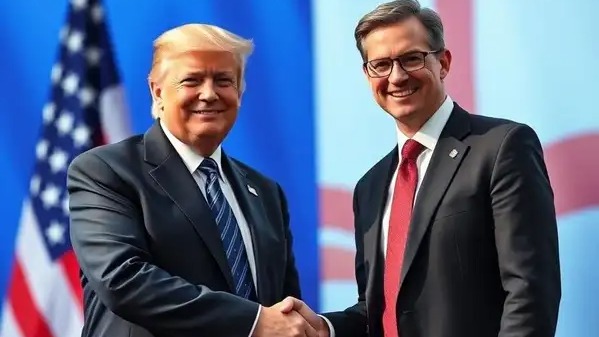
New US-UK Trade Agreement Reached Amid Stalemate on Steel Imports
US and UK Finalize Trade Deal, But Steel Import Dispute Still Looms The United States and the United Kingdom have announced the successful negotiation of a new trade agreement aime
Stock
US and UK Finalize Trade Deal, But Steel Import Dispute Still Looms
The United States and the United Kingdom have announced the successful negotiation of a new trade agreement aimed at strengthening economic ties between the two long-standing allies. While the deal covers various sectors and removes several trade barriers, one significant issue remains unresolved tariffs and import restrictions on British steel and aluminum.
The deal, hailed as a step toward post-Brexit economic cooperation, includes improved access for UK service providers in the US, reductions in certain tariffs on goods, and collaboration on digital trade and emerging technologies. Officials from both nations emphasized the deal’s potential to boost jobs and enhance trade flows worth billions annually.
However, the trade pact did not reach a conclusion on the long-disputed steel import tariffs. Under Section 232 of the US Trade Expansion Act, the Trump administration imposed steep tariffs on foreign steel and aluminum, citing national security concerns. These measures have remained in place for UK exports even after similar restrictions were lifted for the EU, Canada, and Mexico.
UK officials continue to push for parity, expressing frustration that British steelmakers are still subject to tariffs of 25% on steel and 10% on aluminum. According to British trade representatives, the lack of resolution places UK manufacturers at a disadvantage compared to their European counterparts.
Meanwhile, US officials have indicated that talks on steel and aluminum are ongoing and will be handled separately from the broader trade framework. They cite complexities in balancing national security interests with international trade obligations.
Industry groups on both sides of the Atlantic have reacted with mixed responses. While sectors like financial services and agriculture welcomed the trade agreement, the British steel industry voiced disappointment, urging swift resolution to the remaining tariffs.
Analysts suggest that while the agreement is a diplomatic win, the unresolved steel issue reveals deeper challenges in fully normalizing US-UK trade relations in the post-Brexit era. It also underscores the Biden administration’s cautious approach to new trade deals, favoring incremental progress over comprehensive agreements.
As negotiations on steel continue, both governments face pressure to deliver a balanced solution that safeguards domestic industries while promoting free and fair trade. The full benefits of the US-UK trade partnership may hinge on resolving these final sticking points.