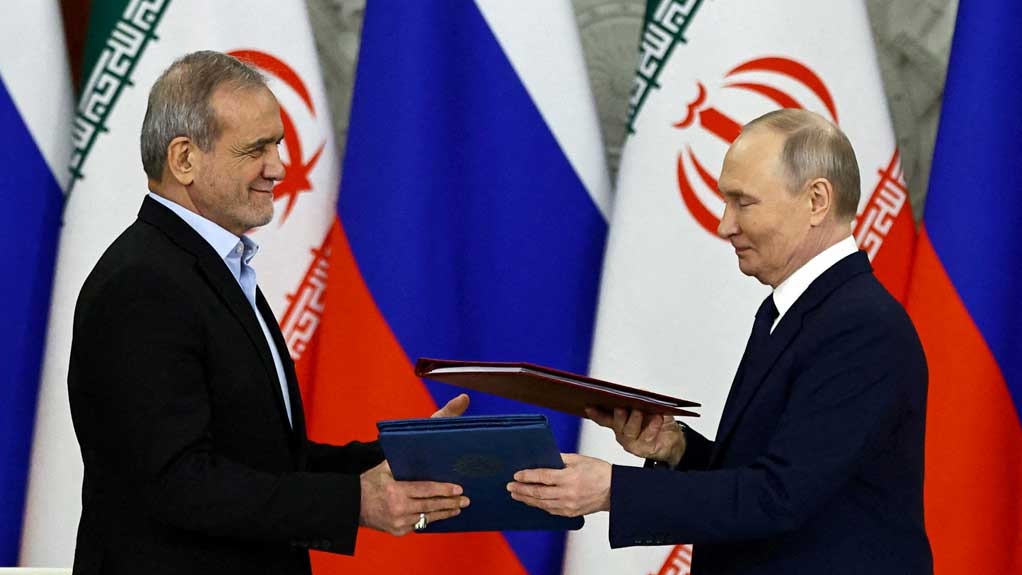
Kremlin Reveals Putin-Trump Call Amid Russia’s Criticism of Israeli Actions in Iran
Putin Speaks to Trump, Condemns Israel’s Strikes on Iran, Kremlin Says In a significant diplomatic development, Russian President Vladimir Putin held a phone conversation with form
Commodities
Putin Speaks to Trump, Condemns Israel’s Strikes on Iran, Kremlin Says
In a significant diplomatic development, Russian President Vladimir Putin held a phone conversation with former U.S. President Donald Trump, during which he expressed strong condemnation of Israel's recent strikes on Iranian territory. The Kremlin's official statement emphasized Moscow's growing concern over the escalating hostilities in the Middle East, particularly in light of Israel's latest military actions targeting Iran.
According to the Kremlin, the two leaders discussed the unfolding situation and its broader implications for regional and global stability. Putin reportedly stressed that such unilateral military actions by Israel risk further destabilizing an already volatile region and could lead to unintended consequences that affect not only the Middle East but international security as a whole.
The conversation comes amid increasing global attention on the conflict between Israel and Iran, which has seen a recent surge in direct confrontations. Israeli airstrikes on Iranian targets, allegedly aimed at curbing Iran’s military expansion and preventing weapon transfers to its regional allies, have drawn mixed reactions from the international community. Russia, a key ally of both Iran and Syria, has consistently voiced its opposition to what it views as violations of international law and sovereignty.
Former President Trump, who maintains an active role in international political discourse, listened attentively to Putin’s concerns, according to Russian sources. While details of Trump’s response were not disclosed by the Kremlin, their discussion highlights ongoing diplomatic channels between key global figures even outside official government roles.
This phone call reflects the Kremlin's broader strategy of positioning Russia as a stabilizing force in Middle Eastern affairs. Moscow has long sought to counterbalance Western influence in the region, often advocating for dialogue and multilateral solutions rather than unilateral military interventions.
International observers are closely watching how these tensions will evolve, especially given the complex network of alliances and rivalries involving the U.S., Russia, Israel, Iran, and other regional powers. The Kremlin’s public disclosure of the Putin-Trump conversation serves not only as a diplomatic message but also as a demonstration of Russia's engagement with influential political figures globally.
As the situation develops, calls for restraint and diplomacy are being echoed by various international organizations, urging all parties involved to avoid further escalation that could lead to widespread conflict and humanitarian crises.