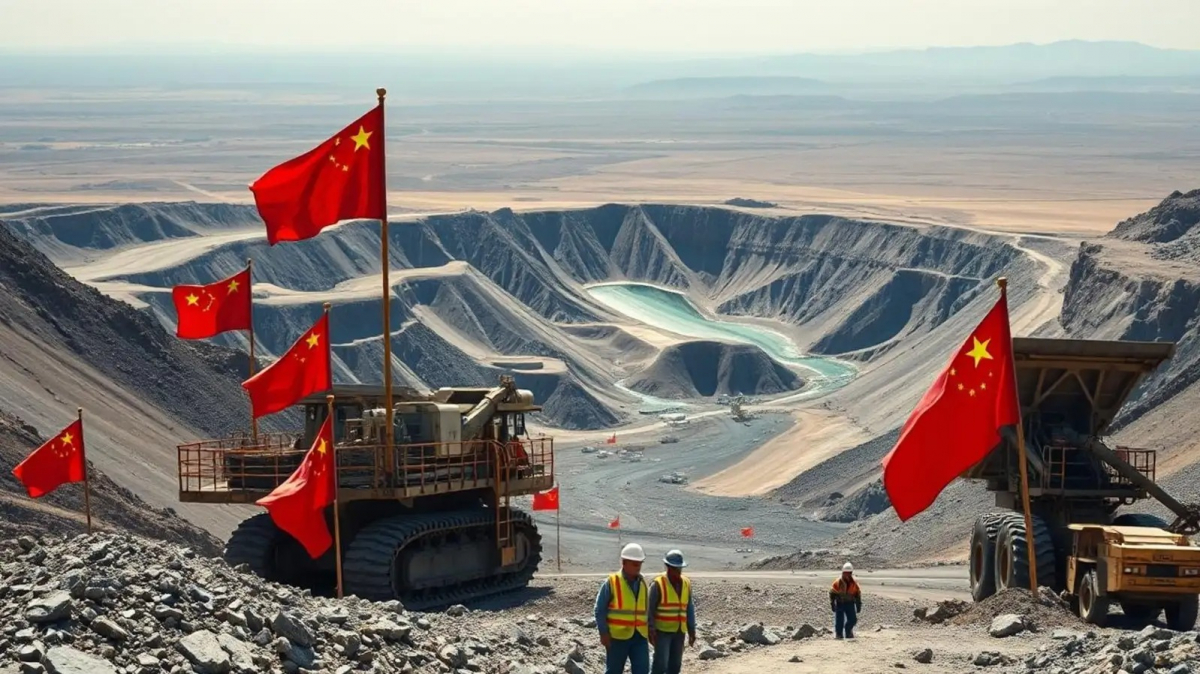
Global Markets React as China’s Rare Earth Magnet Shipments Halve in May
China’s Rare Earth Magnet Shipments Halve in May Due to Export Curbs China’s exports of rare earth magnets saw a dramatic decline in May 2025, falling by nearly 50% compared to the
Indices
China’s Rare Earth Magnet Shipments Halve in May Due to Export Curbs
China’s exports of rare earth magnets saw a dramatic decline in May 2025, falling by nearly 50% compared to the same period last year. This sharp drop follows Beijing’s decision to impose stricter controls on shipments of critical minerals, a move that is reshaping global supply chains and raising concerns among major manufacturing nations.
According to data from China’s General Administration of Customs, the country shipped approximately 2,750 metric tons of rare earth magnets in May, down from about 5,500 metric tons in May 2024. Rare earth magnets are essential components in a range of technologies including electric vehicles (EVs), wind turbines, smartphones, and military equipment.
The export curbs are part of China’s broader strategy to safeguard its strategic resources and strengthen domestic industries. Earlier this year, Beijing introduced new licensing requirements and stricter oversight of rare earth exports, citing national security and environmental concerns. These measures have slowed the approval process for overseas shipments and disrupted supply for manufacturers worldwide.
The impact is already being felt in key industries. Automakers and electronics manufacturers in Japan, Europe, and the United States are scrambling to secure alternative sources or build up stockpiles. Analysts warn that sustained restrictions could drive up prices and slow down the transition to green technologies, particularly electric vehicles and renewable energy projects that rely heavily on rare earth magnets.
China dominates the rare earth supply chain, producing more than 80% of the world’s rare earth magnets. The country’s export policies therefore have significant ripple effects on global markets. The May export figures are a stark reminder of the vulnerabilities that arise from dependence on a single supplier for critical materials.
In response, several countries have accelerated efforts to diversify supply chains. The U.S., EU, and allies like Australia and Canada are investing in rare earth mining and processing projects to reduce reliance on China. However, building a competitive alternative supply chain is expected to take years.
Experts suggest that unless the export restrictions are eased, manufacturers may face higher costs and potential production delays in the coming months. The situation underscores the importance of international cooperation and investment in resilient supply chains for critical minerals.