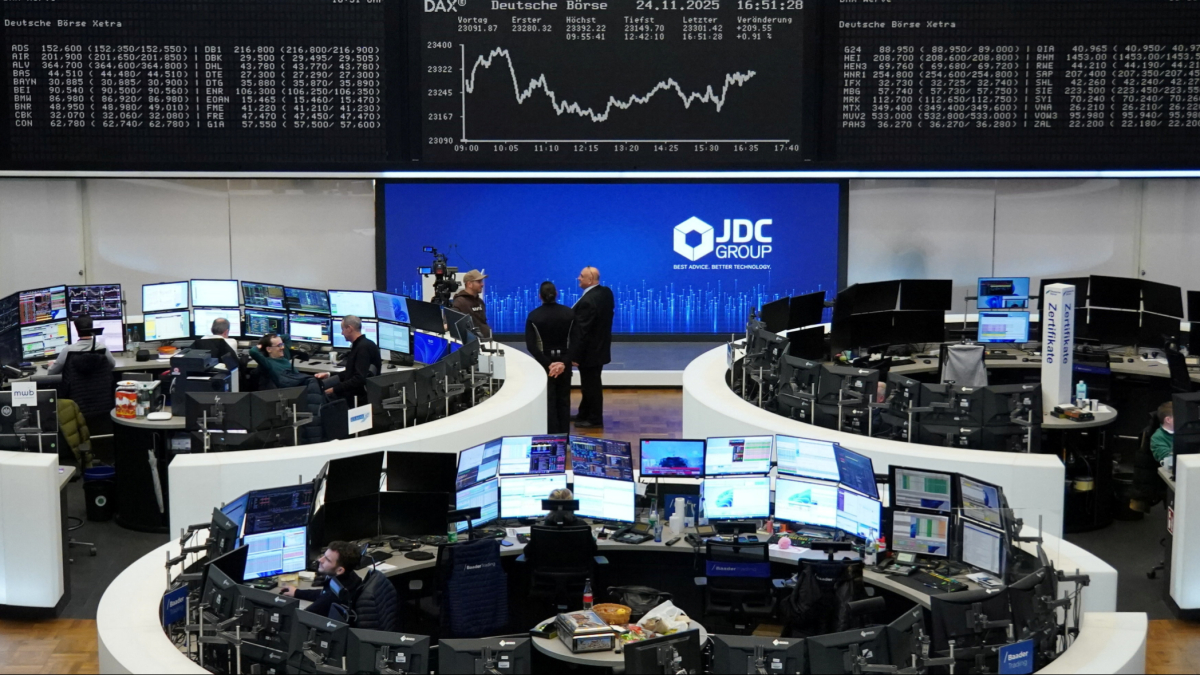
European Shares Edge Higher as Auto and Chemical Stocks Gain Amid Focus on Middle East Talks
European stock markets closed slightly higher as gains in automobile and chemical shares helped lift investor sentiment, while traders closely monitored ongoing diplomatic discussi
27 May 2026
Category
Stock
European stock markets closed slightly higher as gains in automobile and chemical shares helped lift investor sentiment, while traders closely monitored ongoing diplomatic discussions involving the United States and Iran.
The pan-European STOXX 600 index edged upward during trading, supported by stronger performances from industrial sectors despite lingering concerns over Middle East tensions, oil market volatility, and global economic uncertainty.
European Markets Finish Slightly Higher
European equities recorded modest gains as investors balanced improving corporate performance against geopolitical risks.
The STOXX 600 index rose around 0.3%, while several major national indexes also moved into positive territory.
Among the stronger performers were:
- Automobile manufacturers
- Chemical producers
- Industrial companies
- Export-focused businesses
Market analysts said investor confidence improved slightly following reports that diplomatic negotiations between the U.S. and Iran were continuing despite recent military tensions. (reuters.com)
Auto Stocks Lead Market Gains
European automotive shares were among the day’s top performers.
Investors appeared encouraged by improving demand expectations and hopes that easing geopolitical risks could stabilize energy prices and supply chains.
Major European carmakers benefited from renewed buying interest as markets reacted positively to:
- Lower fears of immediate oil supply disruption
- Stronger manufacturing sentiment
- Stable consumer demand outlook
The automobile sector has remained highly sensitive to global energy costs and international trade uncertainty in recent months.
Chemical Companies Also Advance
Chemical stocks also posted notable gains across European exchanges.
Analysts noted that lower fears surrounding a prolonged Middle East supply crisis helped improve confidence in energy-intensive industries.
Chemical manufacturers are particularly vulnerable to:
- Rising oil prices
- Natural gas costs
- Shipping disruptions
- Supply chain instability
As diplomatic talks appeared to continue, investors became slightly more optimistic about short-term industrial stability.
Middle East Talks Remain Key Market Focus
Financial markets worldwide are closely monitoring negotiations involving the United States and Iran.
Recent U.S. military strikes near the Strait of Hormuz had earlier triggered fears of:
- Escalating conflict
- Oil supply disruption
- Shipping instability
- Higher inflation pressure
However, reports suggesting diplomatic channels remain active helped calm some investor concerns. (reuters.com)
Traders continue watching for any signs that ceasefire discussions could either stabilize or further destabilize the region.
Oil Prices Continue Influencing Markets
Energy markets remain one of the biggest drivers of global investor sentiment.
Oil prices recently experienced sharp volatility due to uncertainty surrounding the Strait of Hormuz, which handles a major portion of global crude shipments.
European industries remain especially exposed to fluctuations in:
- Crude oil prices
- Energy import costs
- Shipping expenses
- Manufacturing inputs
Any major escalation in Gulf tensions could quickly reverse positive market momentum.
Investors Staying Cautious
Despite the market gains, analysts say investors remain cautious rather than fully optimistic.
Concerns continue surrounding:
- Global inflation
- Interest rate policy
- Economic slowdown risks
- Geopolitical instability
- Energy market volatility
Some strategists warned that markets are currently reacting to headlines rather than long-term certainty.
Central Banks Still in Focus
European Central Bank policy expectations also continue influencing investor behavior.
Markets are increasingly watching for signals regarding:
- Future interest rate cuts
- Inflation progress
- Economic growth forecasts
- Consumer spending trends
Lower inflation data in parts of Europe has improved hopes that monetary tightening may gradually ease later in the year.
Defense and Energy Stocks Mixed
While industrial sectors gained, defense and energy stocks delivered more mixed performances.
Some investors rotated away from defensive sectors after recent geopolitical-driven rallies.
Others continued maintaining positions in oil and defense companies due to fears that Middle East tensions could escalate unexpectedly.
European Economy Facing Mixed Signals
Recent economic data across Europe has produced a mixed picture.
Some manufacturing indicators have shown improvement, while consumer confidence and broader growth remain uneven across several countries.
Analysts say investors are increasingly trying to determine whether Europe can avoid a deeper economic slowdown while managing ongoing geopolitical risks.
Markets Watching Upcoming Developments Closely
The coming days may prove important for investor sentiment worldwide.
Markets are expected to closely monitor:
- U.S.-Iran negotiations
- Oil price movements
- European inflation data
- Central bank commentary
- Corporate earnings updates
Any major diplomatic breakthrough or renewed military escalation could quickly impact trading conditions globally.
European shares edged higher as gains in automobile and chemical stocks supported markets amid cautious optimism surrounding ongoing Middle East negotiations. While investors welcomed signs that U.S.-Iran diplomacy continues despite recent military tensions, concerns over energy prices and geopolitical instability remain major factors influencing global financial markets.