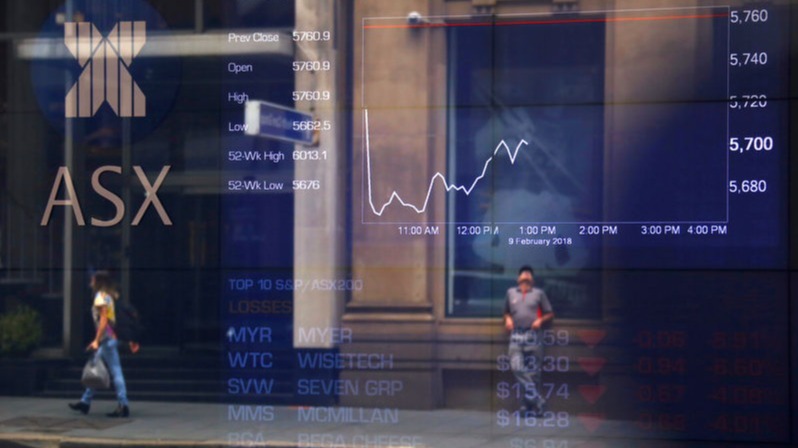
Australian Shares End Lower as Investors Turn Cautious S&P/ASX 200 Slips 0.10%
Australian equities closed marginally lower at the end of trade, with the benchmark S&P/ASX 200 index slipping 0.10 percent as investors adopted a cautious stance amid mixed global
30 December 2025
Category
Stock
Australian equities closed marginally lower at the end of trade, with the benchmark S&P/ASX 200 index slipping 0.10 percent as investors adopted a cautious stance amid mixed global signals. While select sectors managed to post modest gains, losses in heavyweight mining and financial stocks ultimately dragged the market into negative territory.
The S&P/ASX 200 finished the session slightly below the flat line, reflecting a lack of clear direction throughout the day. Trading volumes were moderate, suggesting investors were reluctant to take aggressive positions ahead of key economic data releases and ongoing uncertainty in global markets. The broader All Ordinaries index mirrored the benchmark’s performance, also ending marginally lower.
Market sentiment was influenced by overnight moves on Wall Street, where major US indices delivered mixed performances as investors weighed inflation concerns against expectations of interest rate stability. This cautious tone carried into Asian markets, including Australia, where traders remained selective and focused on stock-specific developments rather than broad-based buying.
The materials sector was one of the biggest drags on the index. Major mining stocks edged lower as iron ore prices softened and concerns resurfaced about demand from China. Investors remain wary of the pace of economic recovery in the world’s second-largest economy, particularly as weak property sector data continues to weigh on sentiment. Shares of leading iron ore producers saw modest declines, contributing to the overall weakness in the index.
Financial stocks also came under pressure, with several of the big four banks closing in negative territory. Profit taking was evident after recent gains, while lingering uncertainty about the outlook for interest rates and credit growth tempered investor enthusiasm. Although Australia’s banking sector remains relatively resilient, expectations of slower loan growth and higher funding costs have kept valuations in check.
In contrast, the energy sector provided some support to the market. Rising crude oil prices helped lift shares of major oil and gas producers, as investors responded positively to signs of tightening global supply. Geopolitical tensions and production discipline among major exporters have kept oil prices elevated, benefiting energy stocks on the ASX.
The consumer discretionary sector delivered a mixed performance. Retail stocks were divided as investors assessed the impact of high interest rates and persistent cost of living pressures on household spending. While some companies with strong balance sheets and pricing power managed to attract buyers, others remained under pressure amid concerns about softer consumer demand in the months ahead.
Technology stocks were relatively subdued, reflecting broader weakness in global tech markets. Higher bond yields continue to weigh on growth oriented stocks, as investors favour companies with more stable earnings and cash flows. Despite Australia’s technology sector being smaller than its US counterpart, global trends still play a significant role in shaping investor behaviour.
Healthcare shares traded narrowly, with gains in some pharmaceutical and biotech stocks offset by losses in healthcare services providers. Defensive sectors like healthcare have attracted interest in recent months due to their relatively stable earnings, but today’s session saw little in the way of strong directional movement.
On the economic front, investors are increasingly focused on upcoming domestic and international data that could influence central bank policy decisions. In Australia, attention remains on inflation trends and labour market conditions, which will play a key role in shaping the Reserve Bank of Australia’s policy outlook. While inflation has shown signs of easing, it remains above the RBA’s target range, keeping the possibility of prolonged restrictive policy in play.
Globally, markets are also watching developments in the United States, where economic data and central bank commentary continue to shape expectations around interest rate cuts. Any shift in the outlook for US monetary policy has the potential to ripple through global markets, including Australia, influencing currency movements, capital flows, and equity valuations.
The Australian dollar traded within a narrow range against the US dollar during the session, reflecting the absence of major catalysts. Currency stability provided little additional direction for equities, though movements in the Aussie dollar remain an important factor for export-oriented companies and sectors such as resources and tourism.
Looking ahead, analysts expect the Australian share market to remain range-bound in the near term. While corporate earnings and dividend yields continue to provide support, global uncertainties and mixed economic signals are likely to limit upside momentum. Investors are expected to remain selective, favouring companies with strong fundamentals, pricing power, and resilient balance sheets.
Despite today’s modest decline, the broader outlook for Australian equities remains cautiously optimistic. The market has demonstrated resilience in the face of global volatility, supported by a stable banking system, strong demand for commodities over the long term, and a well-regulated financial environment. However, near-term fluctuations are likely to persist as investors navigate a complex mix of domestic and international factors.
In summary, Australian shares ended the session slightly lower, with the S&P/ASX 200 down 0.10 percent as weakness in mining and financial stocks outweighed gains in energy. The muted performance reflects a market in wait-and-see mode, as investors assess global cues, economic data, and central bank policy signals before committing to their next move.