Get unlimited access to the best of ClickNews for less than $1/week Register Now
European stock markets, Fed rate cut, Stoxx 600, DAX, FTSE 100,why European stocks are muted, impact of US Fed rate cut on European markets, December Fed rate cut expectations, disconnect between Fed policy and European equities, European market reaction to US monetary policy

Analyzing the Disconnect: Why European Stocks are Muted Despite the Near Certainty of a December US Federal Reserve Rate Cut

European stock markets are currently experiencing a period of muted trading despite the strong and rising market expectation that the U.S. Federal Reserve will implement another in

27 November 2025

Stock

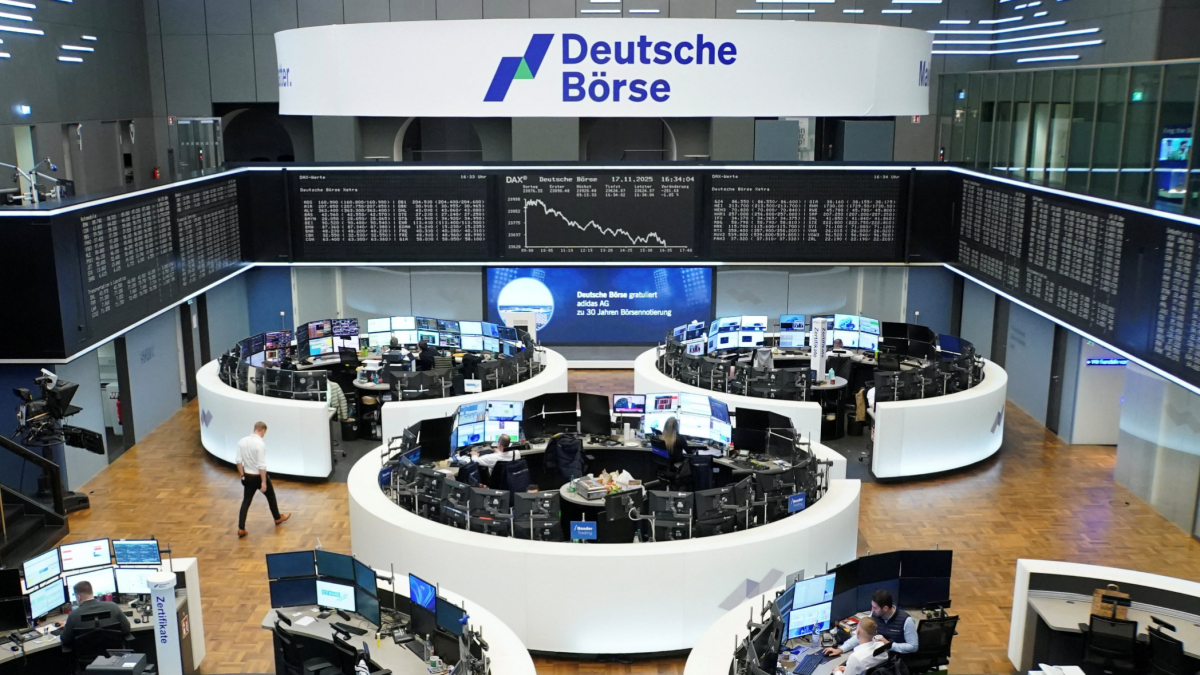
European stock markets are currently experiencing a period of muted trading despite the strong and rising market expectation that the U.S. Federal Reserve will implement another interest rate cut at its final meeting of the year in December. While the optimism surrounding monetary easing provided significant gains in the prior session, major indices are now holding steady, reflecting a delicate balance between bullish hopes for cheaper global borrowing and ongoing caution over geopolitical developments, particularly surrounding the Russia Ukraine conflict. This pause comes as the U.S. markets are closed for the Thanksgiving holiday, thinning trading volumes and reducing immediate directional influence.

The key driver underpinning investor sentiment remains the dovish outlook from the U.S. Federal Reserve. Following softer than expected U.S. economic data and mixed signals from some Fed officials prioritizing a weakening labor market over sticky inflation, the odds for a 25 basis point rate cut in December have surged to approximately 85%, according to the CME FedWatch Tool. This prospect of lower U.S. interest rates typically boosts global equities, as it signals cheaper capital and potentially weaker dollar, which benefits internationally focused European exporters. On Wednesday, this optimism led the pan European Stoxx 600 index to close up over 1.0%, with Germany’s DAX and France’s CAC 40 also posting significant gains, as markets priced in the likely shift in U.S. monetary policy.

However, the current muted trading, with the Stoxx 600 trading slightly lower and key indices like the UK’s FTSE 100 facing marginal losses, suggests investors are taking a cautious breath. The second major factor influencing market movements is the fluid situation regarding the potential Russia Ukraine peace deal. While reports of a U.S. backed framework to end the conflict initially provided a strong boost to markets particularly sectors like banks and oil and gas the optimism has been tempered by analyst warnings about the lack of certainty of a finalized deal. This geopolitical uncertainty acts as a natural ceiling on major gains, preventing a full risk-on rally.

Furthermore, investors are awaiting key domestic signals. Traders are keenly anticipating the release of the minutes from the European Central Bank’s (ECB) last meeting later today, searching for clues on the ECB’s own forward guidance on interest rates and their assessment of Eurozone inflation. While the ECB has maintained a steady stance recently, signs of a weaker domestic economy could increase expectations for future rate cuts in the Eurozone, which would likely provide an additional lift to European indices. Separately, the recent UK Autumn Budget, which included tax hikes, is also being continually weighed against hopes for lower borrowing costs across the continent.

The future outlook remains sensitive to central bank rhetoric. For the immediate term, European markets will likely continue to trade sideways due to the closure of U.S. markets for Thanksgiving, limiting major movements. However, if the Fed confirms its dovish pivot in December, or if the ECB hints at future easing, the underlying positive trend for European equities driven by rotation into moderately valued stocks and improving earnings prospects is expected to reassert itself. Conversely, any failure in the peace talks or a surprisingly hawkish signal from the ECB could quickly reverse the positive sentiment.